Pineapple Fruit Modern Cross Stitch Review
First Impression and Visual Personality
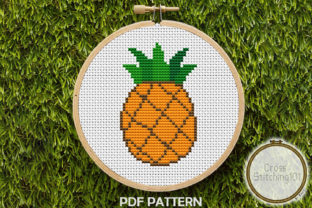
Opening the Pineapple Fruit Modern Cross Stitch file for the first time, the design immediately reads as friendly, playful, and approachable. The pineapple motif carries a natural warmth that works beautifully for hospitality and handmade brands. With a compact stitch area of 28 stitches wide by 45 stitches high and a finished size of approximately 5.09 by 8.18 centimeters, it strikes a balance between visibility and restraint. The shape is vertical and slightly elongated, which opens up interesting placement opportunities on aprons, shirt fronts, and tote bags. The fact that the pattern uses only 5 DMC colors keeps the palette clean and controlled. This simplicity matters when you are planning brand identity across multiple items. A design with too many thread colors can quickly become expensive to produce and harder to maintain consistency across batches. Here, the limited palette suggests a modern, slightly minimalist approach that can feel both premium and handmade without tipping into overly rustic territory.
Design Structure and Stitch Logic
At 28 by 45 stitches, this is a relatively small count pattern. For cross stitch on fabric, the proportions are generous enough to render recognizable detail. But for anyone considering adapting this into a machine embroidery design or digital embroidery file, the stitch count and physical dimensions become critical reference points. The listed size of 5.09 x 8.18 cm gives a real-world footprint that fits neatly on a chest pocket, a sleeve, or the front panel of a cap. I always recommend testing how the design reads at actual size on the intended fabric texture. A design that looks crisp on evenweave may behave differently when digitized for custom apparel or dense cotton canvas. The five-color structure also invites questions about thread colors and contrast. Before committing to production, I would stitch out a sample and review how each color interacts under different lighting, especially if the finished product will be worn in a café, bakery, or outdoor market setting.
Where This Design Shines for Small Business Merch
For small business merch, this pineapple motif has genuine range. I could see it working as an embroidered patch on a canvas tote bag for a boutique grocery or a florist shop. Applied to an apron, it becomes a subtle branded accent without overpowering the garment. The vertical orientation makes it an interesting candidate for apron embroidery on a bib front or along a strap. For cap embroidery, the narrow width of roughly two inches means it can sit comfortably on the front panel without wrapping awkwardly around curved seams. I would position it slightly off-center or centered low on a dad cap for a modern, understated look. On work shirts or staff uniforms, the design could serve as a chest logo accent or a sleeve detail that feels intentional rather than loud. The pineapple itself carries universally positive associations, hospitality, warmth, creativity, and a hint of the tropical. That symbolic value can quietly reinforce a brand identity without needing text or a complex logo lockup.
Patch Conversion and Branded Product Use
If your business model centers on embroidered patch sales or branded merchandise bundles, this design offers a strong starting point. The shape is self-contained enough to finish cleanly with a merrow border or a simple satin edge. I would advise testing the stitch density carefully if converting from a cross stitch pattern to a digitized embroidery file. Cross stitch relies on individual X-shaped stitches that create texture through spacing. Machine embroidery requires a different approach to fill and underlay. A direct one-to-one conversion may produce a patch that feels too sparse or, conversely, too stiff if over-digitized. Running a printable mockup first and then a physical sew-out on the exact fabric you intend to use is non-negotiable. I also recommend reviewing the commercial embroidery license terms before selling items with this design. Even patterns labeled as digital downloads may have restrictions on finished goods, so confirm that your intended use aligns with the seller's permissions.
Fabric Considerations and Daily Wear
Since the pattern description states any fabric you like, the design theoretically adapts to a wide range of materials. In practice, the fabric texture you choose will dramatically affect the final result. Smooth, tightly woven cotton or linen gives the cleanest stitch definition. Terry cloth, heavy canvas, or textured performance fabrics can distort delicate details, especially at smaller scales. For tote bag design applications, I would lean toward medium-weight cotton canvas and use a quality cutaway stabilizer to prevent puckering over time. Items that go through frequent washing, such as staff aprons or work shirts, demand extra attention to thread tension and backing choice. A patch that looks perfect on day one can start pulling or fraying after a dozen laundry cycles if the underlay is insufficient. Testing one piece through repeated washes gives you real data on durability before you produce a full run of branded product.
Color Palette and Brand Alignment
With only 5 DMC colors, the design keeps production costs manageable while still offering enough tonal variation to create depth. When I evaluate a design like this for small business merch, I always look at how flexibly the palette can shift to match an existing brand. Even if the pattern specifies certain thread colors, a skilled digitizer can map those values to a brand's exact palette in the final embroidery file. That said, I recommend ordering a color-accurate thread chart and comparing the listed DMC shades against your brand guidelines before making adjustments. A pineapple that shifts from warm gold to a brassy yellow may feel entirely different on a dark uniform. Test in black and white first to confirm that the design reads clearly without relying solely on color contrast. A strong graphic silhouette holds up better on dark uniforms and textured backgrounds.
Placement Strategy and Size Constraints
The physical footprint of roughly two by three inches gives you flexibility, but it also demands thoughtful placement. On a cap, the vertical rectangle fits best on the front center or slightly off to one side for a more editorial look. Avoid placing it too high on curved cap fronts where the arc of the seam could cut into the top of the pineapple. On a tote bag, consider whether you want the design centered, corner-placed, or scaled as part of a larger arrangement of design assets. For custom apparel like tees or sweatshirts, the left chest position is classic and professional. I would avoid shrinking the design below its stated size for tiny applications such as collar tips or zipper pulls. At already compact dimensions, further reduction could turn the pineapple into an unreadable smudge. If a client requests micro-sizing, I always do a test sew-out and show them the result before greenlighting production.
Building Customer Trust Through Consistent Detail
A well-executed embroidered accent signals care. When a customer receives a handmade product or branded item with clean, intentional stitching, it communicates professionalism and attention to quality. The Pineapple Fruit Modern Cross Stitch design, precisely stitched and thoughtfully placed, can elevate a simple tote bag into something that feels curated. This matters for Etsy sellers, boutique owners, and merch creators who compete on perceived value. A sloppy patch or misaligned embroidery erodes trust instantly. I recommend photographing the finished product in natural light and using those images consistently across listings, packaging inserts, and social media. Visual consistency across your design assets reinforces recognition and buyer engagement.
Practical Designer Checklist Before Production
Every time I prepare a design like this for client work or commercial embroidery production, I run through a standard checklist. It saves time, material waste, and awkward client conversations later. Here is what I recommend for this specific pattern:
- Test in black and white to verify the silhouette reads clearly without color dependency
- Check small patch size at exactly 5.09 x 8.18 cm on the target fabric with the intended stabilizer
- Review thread color contrast under warm and cool lighting conditions
- Inspect spacing between elements to ensure no bleeding or merging during the sew-out
- Confirm hoop size accommodates the design with adequate clearance for your machine
- Test on real fabric that matches the final product material as closely as possible
- Use proper stabilizer for the fabric weight and stitch density
- Create a mockup for client approval using an actual sew-out, not just a digital rendering
- Compare it beside other design assets in your product line to ensure visual cohesion
- Confirm commercial licensing before producing items for sale or client delivery
Fitting the Design Into a Cohesive Product Line
One of the strengths of a motif like the pineapple is how easily it pairs with complementary designs. For a boutique merchandise collection, I could imagine this sitting alongside coffee cup motifs, florals, or geometric patterns that share a similar stitch style. The Cross Stitch Patterns category naturally lends itself to a textured, handmade aesthetic that resonates with customers seeking authenticity. If you are building a range of branded product, consider how this design interacts with your logo, typography, and other graphics. The pineapple could function as a standalone icon on some items and as a supporting element on others. The key is intentional repetition. When customers encounter the same motif across a tote bag, an apron, and a patch set, it builds a mental association that strengthens brand identity over time.
When to Adjust Expectations
There are scenarios where I would exercise caution with this design. Small patch sizes below the stated dimensions risk losing the internal detail that gives the pineapple its character. Cap fronts with steep curves may distort the vertical proportions if the digitizing is not adjusted for the surface arc. High stitch density combined with thin or stretchy fabric can cause puckering that ruins the clean look. Tiny lettering is not a factor here since this is a pictorial design, but if you plan to add text alongside the pineapple, keep it minimal and test legibility at the intended size. Dark uniforms require careful thread selection so the design does not disappear against the background. And any item destined for frequent washing needs robust edge finishing and stable backing to maintain its appearance over months of use.
Strategic Value for Merch Creators and Studios
For embroidery shops that serve multiple small business clients, keeping a library of adaptable digital embroidery file options makes economic sense. The Pineapple Fruit Modern Cross Stitch pattern, adapted into a properly digitized machine embroidery design, offers a versatile asset that suits hospitality brands, artisan food producers, stationery shops, and tropical-themed product lines. Because the pineapple is widely recognized and positively received, it requires less consumer explanation than an abstract mark. That speed of recognition translates to faster buying decisions when customers browse handmade product listings or in-person market displays. A design that communicates instantly is a design that sells. I have seen simple, well-placed embroidered motifs become the visual anchor for entire product collections, and this pineapple has that potential when executed with care and consistency.
Final Notes on Quality and Client Presentation
Before presenting any design to a client or listing a new product, I run a final quality review that includes a sew-out on the intended material, a wash test if applicable, and photography in natural light. For this pattern, I would want to see how the 5 DMC colors interact on a midweight cotton canvas and on a lighter linen blend, since both are common choices for tote bag design and apron embroidery. I would also digitize a version with slightly adjusted pull compensation for different fabric types, keeping notes on which stabilizer and tension settings produced the best result. These process details may seem technical, but they directly affect the finished product that reaches your customer. When a small business merch item arrives with crisp, durable, beautifully placed embroidery, it does more than decorate. It builds confidence, invites repeat purchases, and turns a simple pineapple into a recognizable brand signature.