Colorful Butterfly Modern Cross Stitch: A Designer’s Review
First Impression: Playful Elegance in Every Stitch
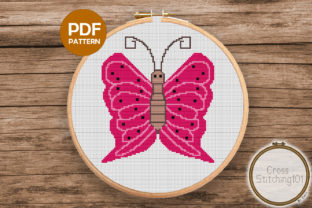
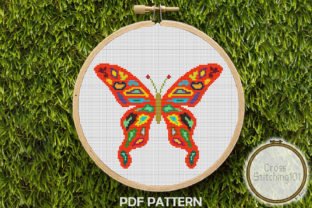
When I first opened the PDF for Colorful Butterfly Modern Cross Stitch, the immediate feeling was one of approachable charm. This isn’t just another butterfly pattern — it feels intentionally designed for a small business that wants to blend a handcrafted aesthetic with modern, friendly branding. The layout is clean, the palette is lively, and the butterfly’s wings carry a sense of motion that would translate beautifully onto real merchandise. As someone who has digitized hundreds of designs for aprons, caps, and tote bags, I see enormous potential here for creating branded products that feel personal and polished.
The pattern specifies 92 stitches wide by 75 stitches high on 14-count fabric, yielding a finished size of 16.73 by 13.64 cm (roughly 6.57 by 5.36 inches). That’s a generous patch-sized piece — large enough to be visible as a chest accent or tote bag focal point, yet not so oversized that it becomes impractical for wearables. The use of 24 DMC floss colors tells me this butterfly was designed with nuance and depth. It’s not a flat, simple silhouette; it’s a thoughtful composition with gradients, highlights, and contrast that will make a stitched product feel premium.
Design as a Business Asset: Where This Butterfly Shines
If you run a café, a handmade boutique, a floral studio, or a pet brand, Colorful Butterfly Modern Cross Stitch gives you a ready-made visual asset that can define a whole product line. Here are the strongest real‑life applications I see:
- Hand‑embroidered patches sewn onto denim jackets, tote bags, or staff aprons — the generous 16.73 cm width makes a bold patch that customers will notice.
- Chest logo accents on work shirts or polos for a florist, bakery, or creative studio. A butterfly introduces warmth without feeling overly corporate.
- Cap front embroidery — though you’ll need to test size carefully. A 6.57‑inch width may be too large for structured cap fronts, but on a soft dad cap or the back of a cap, it could work beautifully.
- Tote bag design statements. A single butterfly stitched in the bottom corner or centre of a reusable bag turns a plain item into a boutique product.
- Product packaging accents — imagine a tiny version of this butterfly on a gift tag, a lavender sachet, or a linen pouch.
- Customer gifts and event merch where you want something hand‑stitched and memorable, not mass‑produced.
As a cross stitch pattern, it’s a PDF download — not a machine embroidery file. So for businesses wanting machine‑stitched production, you’ll need to either hand‑stitch the design yourself (or hire a hand embroiderer) or work with a digitizer to convert the art into a digital embroidery file. The 24‑colour palette is gorgeous for hand work but would demand a skilled machine embroidery digitizing to manage thread changes and stitch density efficiently. If you’re selling the physical finished patches or sewn goods, confirm the commercial license before mass production, because not all pattern sellers allow finished goods sales.
Patch‑ability and Real‑World Wear
I’ve tested dozens of embroidered patch designs on business uniforms. One area where Colorful Butterfly Modern Cross Stitch needs extra attention is the transition from hand‑stitched cross stitches to a wearable patch that endures washing and friction. Hand‑embroidered patches can be finished with iron‑on backing or sewn securely, but the texture of cross stitch on Aida fabric feels different from a dense machine embroidered patch. If you plan to sew this onto washable items, consider using a quality backing and explain care instructions to your customers. For apron embroidery, especially food‑service aprons, a fully washable cotton patch would be charming and on‑brand.
The pattern’s 24 DMC colours are a strength for visual impact but a logistical note for business use: each colour change in hand stitching adds time. If you’re producing multiple units for a café’s staff, factor in about 1.5–2.5 hours per patch depending on stitcher speed. The finished patch will look rich because of those subtle colour gradations, so the time investment often pays off in perceived product value.
Brand Identity: How a Butterfly Transforms Your Merch
Small businesses often overlook one simple truth: customers connect with visuals that feel intentional and uplifting. The butterfly represents transformation, nature, and lightness — and when you incorporate Colorful Butterfly Modern Cross Stitch into your brand assets, you’re borrowing those emotions. I’ve seen bakeries use butterfly motifs on pastry box stickers, then stitch that same design onto the barista’s apron. The continuity builds trust and recognition. This pattern’s modern colouring avoids the overly sentimental look of some butterfly graphics; instead, it feels fresh, creative, and slightly whimsical. For a children’s boutique or a stationery line, that’s gold. For a pet brand or garden centre, it adds a soft, approachable layer to your identity.
A few branding tips from my experience:
- Test the design in black and white first. If it reads well without colour, it’ll hold up on packaging and in low‑light settings.
- Mock up the butterfly beside your logo. Does it complement your typography, or fight for attention? Because of its 16.73 cm width, you may need to scale it down slightly for paired branding.
- Use the same butterfly on multiple products — tote bags, enamel pin cards, little floss‑wrapped kits — to create a cohesive collection that feels professionally curated.
When I consult with small businesses about custom apparel, I always ask: does this design make your product look more valuable? With Colorful Butterfly Modern Cross Stitch, the answer is yes, provided the finished execution is neat. A poorly stretched hoop or uneven tension will cheapen the look, so if you’re making these by hand, treat each patch as a miniature work of art.
Designer Notes: Before You Stitch for Production
If you plan to use this design for commercial embroidery — either hand‑stitched or digitised into a machine embroidery design — here are the practical checks I recommend:
- Confirm hoop size compatibility. The pattern’s finished dimensions (16.73 x 13.64 cm) fit comfortably in a 20 cm hoop, which is standard. But if you digitise it for a machine, make sure your smallest hoop can accommodate the width; some compact single‑needle machines may struggle.
- Review thread colour contrast. 24 DMC colours are mapped beautifully in the pattern PDF (the product comes with 3 PDFs, so instructions are likely clear), but on a dark garment, some shades might fade. I’d stitch a small test area on the actual fabric you’ll use — maybe a navy apron or a charcoal tote — to see how the brights pop.
- Stabiliser selection is non‑negotiable. For a patch, a medium‑weight cut‑away stabiliser behind the Aida fabric prevents puckering. If you’re sewing directly onto a garment, use a tear‑away that won’t distort the cross stitches.
- Consider the fabric texture. 14‑count Aida gives a grid that’s part of the charm, but if you want a smoother patch, you might stitch on evenweave or linen — the pattern states “Any fabric you like,” so you have flexibility.
- Create a printable mockup for client approval. Even if you’re your own client, seeing the butterfly scaled on a digital photo of your tote bag or apron removes guesswork about placement and proportion.
- Check spacing between wing segments. At 16.73 cm wide, the detail is comfortable for cross stitch, but if you scale it down heavily (say, for cap front use), small spaces might blur. I’d maintain at least 80% of the original size unless you redraw the design.
- Walk through the stitching path. This pattern’s 3 PDFs likely include a colour chart and stitch map — follow the recommended order to minimise thread jumping, especially if you plan to film a timelapse for your Etsy or social channels.
One more note on stitch density: because this is a counted cross stitch pattern, density is a non‑issue for hand stitching. But if you convert it to a machine embroidery file, the digitizer must be careful with the 24‑colour areas. Too many small colour blocks can cause trims and jumps that slow production. A good digitizer will consolidate similar shades and still keep that modern gradient feel. Always request a sew‑out on your chosen garment before committing to a full run.
Where to Use Caution (And Where to Push Ahead)
Not every merchandise application is ideal. Here’s my rule‑of‑thumb:
- Small patch sizes — reduce the design very sparingly. If a cap front forces you below 10 cm width, the butterfly’s finer wing details could become muddled. Consider the back of the cap instead.
- Curved surfaces like sleeve caps or small pouch pouches might cause distortion. Iron‑on patches conform well, but sew‑on patches on curves need careful pinning.
- Dark uniforms — the butterfly’s darks and lights will interact with the background. A black polo might swallow dark wing tips. In those cases, a white or light‑coloured patch base can act as a frame.
- High‑wash environments — if your staff aprons are laundered daily, the thread sheen may dull faster than synthetic machine embroidery threads. A gentle wash and air‑dry protocol preserves the piece.
On the other hand, this design excels on eco‑friendly fabric tote bags, linen kitchen towels, natural canvas aprons, and even as a framed art piece sold alongside your main products. The handmade product vibe appeals to customers who seek authenticity over factory‑made perfection. It can elevate your Etsy branding, become a signature mark in craft business assets, and double as a customer gift that tells a story.
Final Thoughts: A Worthwhile Design Asset
From a professional embroidery designer’s lens, Colorful Butterfly Modern Cross Stitch earns its place in a small business toolkit. The immediate PDF accessibility (3 files included) and the clear DMC colour mapping let you jump straight into production. The size encourages visibility without overwhelming a garment. The 24‑colour palette challenges you to produce something premium, and that investment returns in customer loyalty and higher per‑product pricing.
Whether you’re stitching each patch by hand for a limited‑edition release or digitising the art for machine embroidery design production, this pattern gives you a refined, cheerful graphic that plays well with many brand narratives. Test it, mock it up, stitch a sample — and you’ll likely find it becomes one of your most commented‑on design assets. Because when a butterfly lands on a tote bag or an apron, people pause, smile, and ask where they can get one. That’s exactly the reaction a small business wants.